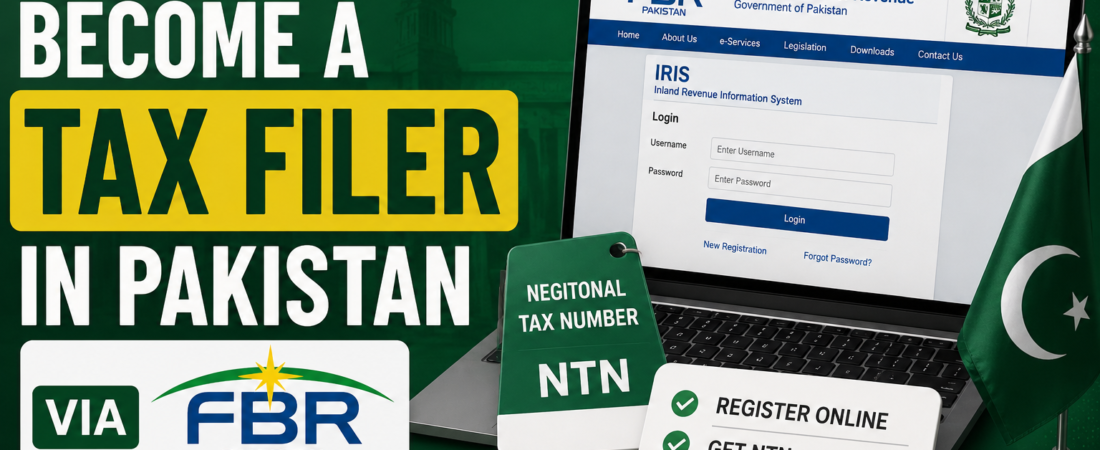
Become Tax Filer Pakistan: The Easy 2026 Guide for Every Earner
Have you noticed extra deductions on your bank withdrawals, mobile bills, or vehicle token tax? You are not the only one. Every year, lakhs of Pakistanis pay double the tax simply because their name is missing from the Active Taxpayer List (ATL). The good news is simple. In 2026, you can become tax filer Pakistan now requires in under one week, fully online.
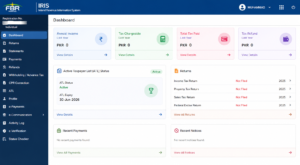
The Federal Board of Revenue (FBR) runs a modern portal called IRIS 2.0. So, you can register your NTN, file your return, and check your filer status without leaving your home. Yet most salaried workers, freelancers, and small business owners still avoid the process because they think it is too hard. In reality, it is easier than opening a new bank account.
This guide walks you through the entire process step by step. First, you will learn what a filer really is. Next, you will see the documents you need in 2026. After that, you will follow the exact path on FBR IRIS. Finally, you will discover the real money you save once your name appears on the ATL. Let us start.
What Does It Mean to Become Tax Filer Pakistan Recognises?
A tax filer in Pakistan is a person whose name appears on the Active Taxpayer List (ATL) maintained by the FBR. To get there, you must register an NTN (National Tax Number) and then file your annual income tax return through the IRIS portal.
A non-filer, on the other hand, is either unregistered or has skipped a return. Therefore, the government applies much higher withholding tax rates on every financial move a non-filer makes.
In short, becoming a filer is not about paying more tax. In most cases, it is about paying less tax than non-filers on the same transactions.
Read Check E Challan Karachi: The Fast 2026 Guide for Every Driver
Why Should You Become Tax Filer Pakistan Status Recognises?
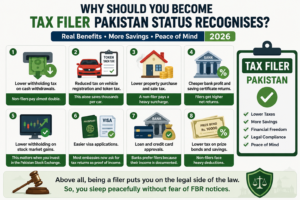
Many people think only the rich need to file. That myth costs Pakistanis billions every year. Below are the real, money-saving reasons to become tax filer Pakistan status recognises in 2026.
- Lower withholding tax on cash withdrawals. Non-filers pay almost double.
- Reduced tax on vehicle registration and token tax. This alone saves thousands per car.
- Lower property purchase and sale tax. A non-filer pays a heavy surcharge.
- Cheaper bank profit and saving certificate returns. Filers get higher net returns.
- Lower withholding on stock market gains. This matters when you invest in the Pakistan Stock Exchange.
- Easier visa applications. Most embassies now ask for tax returns as proof of income.
- Loan and credit card approvals. Banks prefer filers because their income is documented.
- Lower tax on prize bonds and savings. Non-filers face heavy deductions.
Above all, being a filer puts you on the legal side of the law. So, you sleep peacefully without fear of FBR notices.
Who Is Eligible to Become Tax Filer Pakistan Recognises?
The eligibility is wider than most people realise. You can register and file even if your income is below the taxable limit. In fact, filing with zero or low taxable income still puts your name on the ATL.
You should file a return if you fall in any of these groups:
- Salaried employees earning above Rs. 600,000 per year
- Business owners and shopkeepers of any size
- Freelancers, IT exporters, and YouTubers earning in any currency
- Property owners (residential or commercial)
- Vehicle owners with cars above 1000cc
- Anyone holding a foreign currency account or Roshan Digital Account
- Overseas Pakistanis with declared assets in Pakistan
- Students earning through online platforms
Even if you fall outside these groups, voluntary filing makes sense. Because the benefits in everyday banking and travel are massive.
Documents You Need to Become Tax Filer Pakistan Recognises
Before opening the IRIS portal, gather the following items. Otherwise, the registration may stall halfway.
You will need:
- A valid CNIC (front and back scan, clear and readable)
- An active mobile number registered in your own name with PTA
- An active email address that you check regularly
- Your bank account details (IBAN, branch, and bank name)
- A recent salary slip or employment certificate if you are salaried
- A business letterhead or profession proof if you are self-employed
- Recent utility bills to confirm your address
- Foreign income proof if you are an overseas Pakistani
- Invoices and contracts if you are a freelancer
Additionally, keep a small notebook ready to save your IRIS password and security questions. So, you can log back in easily next year.
How to Become Tax Filer Pakistan Recognises (Step by Step)
Now we reach the core of this guide. Below is the exact 5-step path used in 2026 to become tax filer Pakistan recognises on the ATL.
Step 1: Get Your NTN on FBR IRIS 2.0
First, open Chrome and visit iris.fbr.gov.pk. Then click “Registration for Unregistered Person.” Enter your CNIC, mobile number, email, and address. After that, you will receive two OTPs, one on your phone and one on your email.
Once you verify both, the system generates your National Tax Number (NTN) instantly. For most individuals, the NTN equals your CNIC number. So, you do not need to memorise a new code.
Step 2: Log In to IRIS and Complete Your Profile
After getting your NTN, return to iris.fbr.gov.pk and log in using your CNIC and the password you created. Then click on “Profile” and fill in:
- Personal details (name, father’s name, address)
- Bank details (IBAN, branch)
- Employer information (if salaried)
- Business details (if self-employed)
- Property details (if you own any)
Save each section before moving to the next. Otherwise, the system may lose your unsaved data.
Step 3: Choose the Correct Tax Return Form
Now choose the right form. In 2026, the most common forms are:
- Form 114(I) for individuals (salaried and non-salaried)
- Form 116 for businesses and self-employed
- Form 116A for asset declaration (mandatory with business return)
- Form 114(I) Salary for employees with single salary source
If you are unsure, the IRIS dashboard now suggests the right form based on your profile. So, just follow the prompt.
Step 4: File Your Income Tax Return
Open your chosen form and fill in:
- Income details (salary, business, freelance, rental, dividends, etc.)
- Tax already deducted by your employer or bank
- Wealth statement showing your assets and liabilities
- Personal expenses for the year
After that, click “Calculate Tax.” The system shows your total tax due or refund. Pay any balance through FBR e-payment (CPR) via your bank app. Finally, click “Submit.”
Step 5: Wait for the ATL Update and Verify
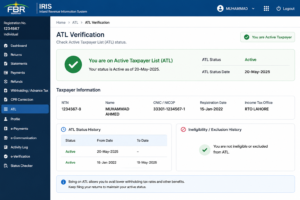
FBR updates the Active Taxpayer List every Monday. Therefore, your name should appear within 1 to 7 days after submission. To verify, use any of these methods:
- SMS: Send your CNIC (without dashes) to 9966. Wait for the reply.
- Online: Visit
fbr.gov.pk→ ATL → Enter your CNIC. - Tax Asaan App: Available on Android and iOS for quick checks.
Once your status shows “Active,” you are officially a filer. Congratulations.
What If You Missed the Deadline?
The annual filing deadline usually falls on 30 September for salaried individuals. However, FBR often extends it by a month or two. If you missed both, you can still become tax filer Pakistan recognises by paying an ATL surcharge:
- Rs. 1,000 for individuals
- Rs. 10,000 for Associations of Persons (AOPs)
- Rs. 20,000 for companies
After paying the surcharge and submitting your return, your name moves to the ATL in the next weekly update. So, do not assume the door is closed if you missed September. Just file as soon as possible.
A Real Filer’s Story (Why It Saves Real Money)
My cousin Ayesha works at a software house in Karachi and earns Rs. 1,80,000 per month. For three years, she stayed a non-filer because “no one explained it properly.” As a result, every time she withdrew cash from the ATM, paid her car token tax, or renewed her driving license, she paid almost double the tax.
In total, she lost over Rs. 90,000 in extra withholding across those three years. Last year, she finally filed her return through IRIS in just 90 minutes. Now her bank profit, vehicle tax, and stock market gains all face the lower filer rate.
So, the lesson is clear. The cost of filing is almost zero. The cost of not filing is huge.
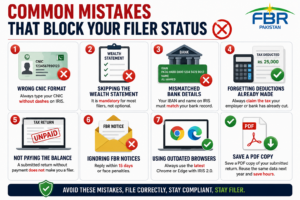
Common Mistakes That Block Your Filer Status
Even though FBR IRIS is now user-friendly, many first-time filers still trip on small issues. Therefore, avoid these traps:
- Wrong CNIC format. Always type your CNIC without dashes on IRIS.
- Skipping the wealth statement. It is mandatory for most filers, not optional.
- Mismatched bank details. Your IBAN and name on IRIS must match your bank record exactly.
- Forgetting deductions already made. Always claim the tax your employer or bank has already cut.
- Not paying the balance. A submitted return without payment does not make you a filer.
- Ignoring FBR notices. Reply within 15 days or face penalties.
- Using outdated browsers. Always use the latest Chrome or Edge with IRIS 2.0.
Above all, save a PDF copy of your submitted return. So, you can reuse the same data next year and save hours.
Tips to Stay a Filer Every Year
Becoming a filer is only half the job. Staying on the ATL year after year is what unlocks the real benefits. Therefore, follow these proven habits:
- Set a yearly reminder for 1 September. That gives you a full month to file before the deadline.
- Save your IRIS login in a password manager.
- Keep your salary slips, invoices, and rent receipts organized monthly.
- Open a separate bank account if you are a freelancer. This makes income tracking simple.
- Get help from a small tax consultant if your income mix is complex. Their fee is usually under Rs. 5,000.
- Check your ATL status quarterly, especially before any big payment or purchase.
In short, treat tax filing like an annual health check-up. Small effort, big peace of mind.
Read How to Renew Driving License in Pakistan via DLIMS (2026).
Frequently Asked Questions
Q1: Is it free to become tax filer Pakistan recognises?
Yes. Registration and filing are completely free on the FBR IRIS portal. You only pay any tax you actually owe.
Q2: How long does it take to appear on the ATL after filing?
Usually 1 to 7 days. FBR refreshes the ATL every Monday.
Q3: Can a housewife or student become a filer?
Yes. Anyone with a CNIC and any source of income (even gifts above a limit) can file. Many file with “zero income” to get filer status for banking benefits.
Q4: Do overseas Pakistanis need to file in Pakistan?
Only if you have Pakistani-source income or declared assets in Pakistan. Most overseas Pakistanis file to enjoy lower tax on their Roshan Digital Account returns.
Q5: What happens if I never file at all?
You stay a non-filer. Therefore, you pay higher withholding tax on banking, vehicles, property, and shares for the rest of your life.
Q6: Can I hire someone to file on my behalf?
Yes. Many certified tax consultants charge Rs. 3,000 to Rs. 10,000 for a basic return. However, you can do it yourself in 2026 with this guide.
Final Words — File Today, Save for Years
Now you know exactly how to become tax filer Pakistan recognises through FBR IRIS in 2026. The whole process takes about an hour and pays you back many times over. So, do not let another year of double-tax deductions slip by. Open the IRIS portal this week and complete your registration.
If this guide helped you, share it with one friend who keeps saying “filing is too complicated.” Got a question? Drop it in the comments below, and I will reply personally within 24 hours. Stay legal, save money, and unlock all the doors a filer status opens.